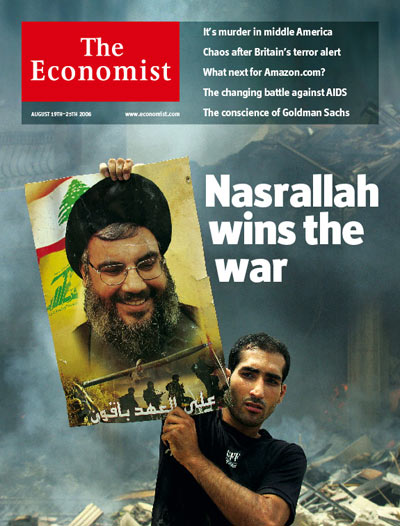
 Es así. Deberíamos pensar qué significa. Digo, no sé, me parece.
miércoles, agosto 23, 2006
La realidad no mide ni deja de medir: es la realidad
Es así. Deberíamos pensar qué significa. Digo, no sé, me parece.


martes, agosto 22, 2006
Joaquín no mide
Joaquín no atina a medir. Quévacer. Gracias por mantener viva la llama de la República (??).
jueves, agosto 17, 2006
miércoles, agosto 16, 2006
Todo por que midas
Jorge Asís, un fenómeno de estos tiempos. Ex embajador en Portugal. Me parece bien, creo que todos tenemos que pensar. También pensar quién fue cada uno en cada momento. Pero sobre todo pensar cómo nos paramos frente al Gobierno. Los que respaldamos algunas cosas seguro que vamos a tener más de qué arrepentirnos. Esta es la Argentina, claro. Lo que se me ocurre al leer a Asís es ¿podemos manejar al kirchnerismo? ¿podemos hacerle "entrismo" al kirchnerismo? ¿se puede dividir la paja del trigo del kirchnerismo? ¿es la cuota (variable) de incertidumbre que el kirchnerismo genera a algunos sectores del capital concentrado aquello que, creemos, es la política? ¿o no? ¿o es sólo otro reacomodamiento? ¿o es un poco de todo eso, como creo que es? Nosotros, somos lo que viene. Que quede claro.
Gracias por no medir
 No miden y nunca medirán. Además de los de la foto (entre los que está el Sr. Castells, amigo de La Bonaerense), estuvieron Carrió, Chironi (UCR), "Toty" Flores (piquetero carriotista) y Diego Guelar (uf). Todos ellos trabajadores para el Gobierno, tiempo completo.
martes, agosto 15, 2006
Jugando para el equipo de los que no miden
Andrés, Andrés... Más allá de si la nota mide o no mide (lo dejo a criterio del lector), piénsese para quién juega siempre nuestro amigo Andrés.
¿Mide?
Un "binario" por excelencia, José María Rosa. Se cumplen 100 años de su nacimiento. No sabemos si mide, pero siempre asomarnos al revisionismo es tentador. Los buenos, son buenos, los malos, malos. De alguna forma, así está formateada nuestro pensamiento. El arte está en tener las convicciones claras, sin perder la duda al final del camino (la jactancia de los intelectuales, Rico dixit, bah...).
sábado, agosto 12, 2006
Veamos si mide
Dos artíulos del New Left Review que no leí pero que alguien debería leer. Uno sobre las guerras y otro sobre el Este Asiático. Dos temas que no nos tocan pero que -seguro- ya van a llegar.
viernes, agosto 11, 2006
Otra que ¿mide?

Tomado de The Economist:
Para la revista, los superpoderes no son para tanto, chicos. Son los mismos que tiene Lula. No hagan tanto bardo ¿no?
Argentina's presidency
Not so super powers
Aug 10th 2006 | BUENOS AIRES
From The Economist print edition
Néstor Kirchner sidelines Congress and the courts
IN 1993 Carlos Menem, then Argentina's president, made a deal. The congressional opposition allowed him the right to run for re-election and changed the constitution to make lawful decrees he had already issued. In return, the president's term was reduced from six years to four and his influence over other branches of government, such as the judiciary, was limited. The agreement, known as the Olivos Pact, expanded presidential power in some ways and restricted it in others. The current president, Néstor Kirchner, is now casting off the fetters.
This is the work of a political virtuoso. Through changes in the tax system Mr Kirchner has cowed nearly all the provincial governors, historically the most effective counterweight to the presidency. By founding state-owned enterprises and re-nationalising privatised ones he has expanded the executive's power over employment and prices. He appointed a majority of the judges on the Supreme Court, then gained an effective veto over lower-court nominations. His biggest triumph came on August 3rd, when Congress gave him authority to reallocate government spending as he sees fit. Mr Kirchner may even circumvent term limits—the Olivos Pact holds him to two consecutive terms—by alternating presidencies with his wife, Cristina Fernández de Kirchner, a popular senator.
None of this puts Mr Kirchner in the same class as Venezuela's Hugo Chávez, an elected strongman, still less in the company of generals who ruled Argentina in the 1970s. Some of Mr Kirchner's newly acquired powers, such as discretion over spending and a bigger share of tax revenue, resemble those enjoyed by Brazil's president. Nevertheless, Mr Kirchner is “the most centralising president in Argentina's modern democratic history,” argues Luis Tonelli, a political columnist. Mr Kirchner may fancy himself a latter-day Juan Perón, a populist champion of the proletariat who led Argentina for a dozen years in the 20th century. Argentina's fragile democratic institutions, many liberals fear, will suffer.When Mr Kirchner took office in May 2003 few Argentines expected him to last a full term. He won the election after Mr Menem withdrew from the run-off, denying the incoming president a popular mandate. Mr Kirchner has since achieved popularity by presiding over a sharp recovery from an economic crisis that began in 2001 and by forcing creditors to write off much of Argentina's public debt.
Economic success laid the foundation for Mr Kirchner's accumulation of power. He slapped very high taxes, of more than 20% in some cases, on export revenues, which had been boosted by a devaluation of the peso and high prices for commodities. Unlike nearly all other government revenues, export taxes are exempt from the “co-participation” system under which a portion of federal tax is automatically distributed to the provinces. As a result, the provinces' share of tax revenues fell from 39% in 2001 to 34% in 2005, making governors more dependent on Mr Kirchner's goodwill. Unsurprisingly, five of the six governors from the Radical Party—theoretically the opposition—have allied with the president. He is likely to choose one as his running mate in 2007.
Ignoring their history of losses and inefficiency, Mr Kirchner has taken over enterprises once owned by the state and founded new ones. The postal service has been re-nationalised, along with Buenos Aires's water utility; the government has acquired minority stakes in the main privately owned airline and the airport operator. New state enterprises now being created include another airline, an energy company and a manufacturer of satellites. All this will enable Mr Kirchner to set a wide range of prices directly, to steer investment to favoured regions and to boost employment if the economy slows down.
The president initially won praise for making the process of nominating Supreme Court judges more transparent. Recently, though, he has eroded judicial independence by weakening the Magistrates' Council, a pillar of the Olivos agreement. The council, which comprises lawyers, academics and representatives of the legislature and the executive, vets potential judges and sends a shortlist to the president, who makes the final choice. In February, at Mr Kirchner's behest, Congress reduced the council's membership from 20 to 13 but left him with five appointees. This allows the president to deny the body a quorum, in effect giving him a veto over judicial nominations.
This is a modest coup compared with Mr Kirchner's hollowing out of Congress's powers, often with the co-operation of Congress itself, which he controls even though he lacks a formal majority in the lower house. He has resorted more frequently than his predecessors to executive decrees, which remain law unless Congress revokes them. And now Mr Kirchner has gained a virtually free hand over the budget. He had already enjoyed the power to rewrite spending bills as long as he spent only the overall amount appropriated by Congress, but those “super-powers”, introduced during the economic crisis, expired in 2005. Congress has now restored them permanently, conceding one of its primary powers to the president.
So far, most Argentines are too grateful to Mr Kirchner for the economic recovery to join intellectuals and activists in bemoaning “hyperpresidentialism”. Opinion polls predict an easy win against all potential challengers in next year's election. “The best guarantee of the separation of powers is that Argentines can vote every two years [for Congress],” Mrs Kirchner told opposition senators during a debate on the budget law. “Don't be afraid, because if this government does horrible things as you fear it will, the people won't vote for it, just like they didn't vote for you.” Senator Kirchner neglected to mention that her husband's power grab makes such a catastrophe more likely.
Mide
Acá este fulano en el Financial Times dice algo así como arriba los de abajo y abajo los de arriba. Que las economías emergentes suben y los desarrollados se estancan. Habrá que ver.
"Incluso en la América Latina hispanoparlante, la inflación de un dígito y los bajos déficit fiscales se han convertido en la norma. Esto es un fuerte contraste con el pasado de muchos de aquellos países y sus dolorosas experiencias con la hiperinflación", bate.
Es una mirada medio miope sólo sobre las cuentas, pero puede valer.
"Incluso en la América Latina hispanoparlante, la inflación de un dígito y los bajos déficit fiscales se han convertido en la norma. Esto es un fuerte contraste con el pasado de muchos de aquellos países y sus dolorosas experiencias con la hiperinflación", bate.
Es una mirada medio miope sólo sobre las cuentas, pero puede valer.
jueves, agosto 10, 2006
Sigue sin medir
Evento: Foro Empresario Infobae.
Lugar: Sherathon Retiro
Fecha: 09-08-06
Moderador: Daniel Hadad.
Disertantes: Carlos Felices (CEO Telecom), Felipe Rovera (presidente de GM Argentina), Marcelo Mindlin (presidente Grupo Dolphin), Eduardo Elsztain (presidente IRSA), Jorge Birto (presidente Banco Macro) + De Vido + Miceli.
Una encuesta:
Sobre 334 empresarios consultados, el 64,5 por ciento contestó que "el modelo económico actual es superior al de la convertibilidad". 58 por ciento calificó de "excelente", "muy buena" o "buena" la "gestión del Gobierno nacional".
Preocupaciones: - La modificación de leyes laborales (41,9 %)
- La suba de salarios (41,3%)
- El accionar de la justicia laboral (35,3 %)
- La nueva ley de ART (9,6 %).
(...)
Lugar: Sherathon Retiro
Fecha: 09-08-06
Moderador: Daniel Hadad.
Disertantes: Carlos Felices (CEO Telecom), Felipe Rovera (presidente de GM Argentina), Marcelo Mindlin (presidente Grupo Dolphin), Eduardo Elsztain (presidente IRSA), Jorge Birto (presidente Banco Macro) + De Vido + Miceli.
Una encuesta:
Sobre 334 empresarios consultados, el 64,5 por ciento contestó que "el modelo económico actual es superior al de la convertibilidad". 58 por ciento calificó de "excelente", "muy buena" o "buena" la "gestión del Gobierno nacional".
Preocupaciones: - La modificación de leyes laborales (41,9 %)
- La suba de salarios (41,3%)
- El accionar de la justicia laboral (35,3 %)
- La nueva ley de ART (9,6 %).
(...)
miércoles, agosto 09, 2006
No-mi-de (no sé si me ex-pli-co)
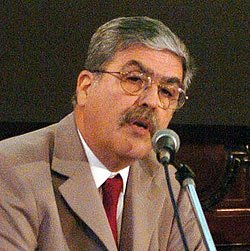
Una cosa, es una cosa. Otra es la patria devidera y la neo-burguesía devidista, que estimo también son algunos de ellos, no lo puedo probar. Moraleja: "No me pidan que me ponga la camiseta de Alessandra Minicelli"
martes, agosto 08, 2006
lunes, agosto 07, 2006
sábado, agosto 05, 2006
jueves, agosto 03, 2006

miércoles, agosto 02, 2006
Mide
Si se fijan detenidamente, verán el aumento del salario real en la Argentina (últimas páginas del pdf.). Gracias Machinea en la CEPAL. El impuestazo aliancista comienza a dar sus frutos.
martes, agosto 01, 2006
Mide II
Beautiful. Leído en Clarín de hoy.
>CONTRATOS POR EL Y2K<
Claudia Bello va a juicio oral
El siglo XXI ya lleva más de un lustro. Pero el cambio de milenio todavía resuena en Claudia Bello. En las próximas semanas se le pondrá fecha de inicio al juicio oral que se le hará por presunto delito en la contratación del plan YK2. Las computadoras no enloquecieron, pero ella sigue la cuenta regresiva.
>CONTRATOS POR EL Y2K<
Claudia Bello va a juicio oral
El siglo XXI ya lleva más de un lustro. Pero el cambio de milenio todavía resuena en Claudia Bello. En las próximas semanas se le pondrá fecha de inicio al juicio oral que se le hará por presunto delito en la contratación del plan YK2. Las computadoras no enloquecieron, pero ella sigue la cuenta regresiva.
Suscribirse a:
Entradas (Atom)
.jpg)


